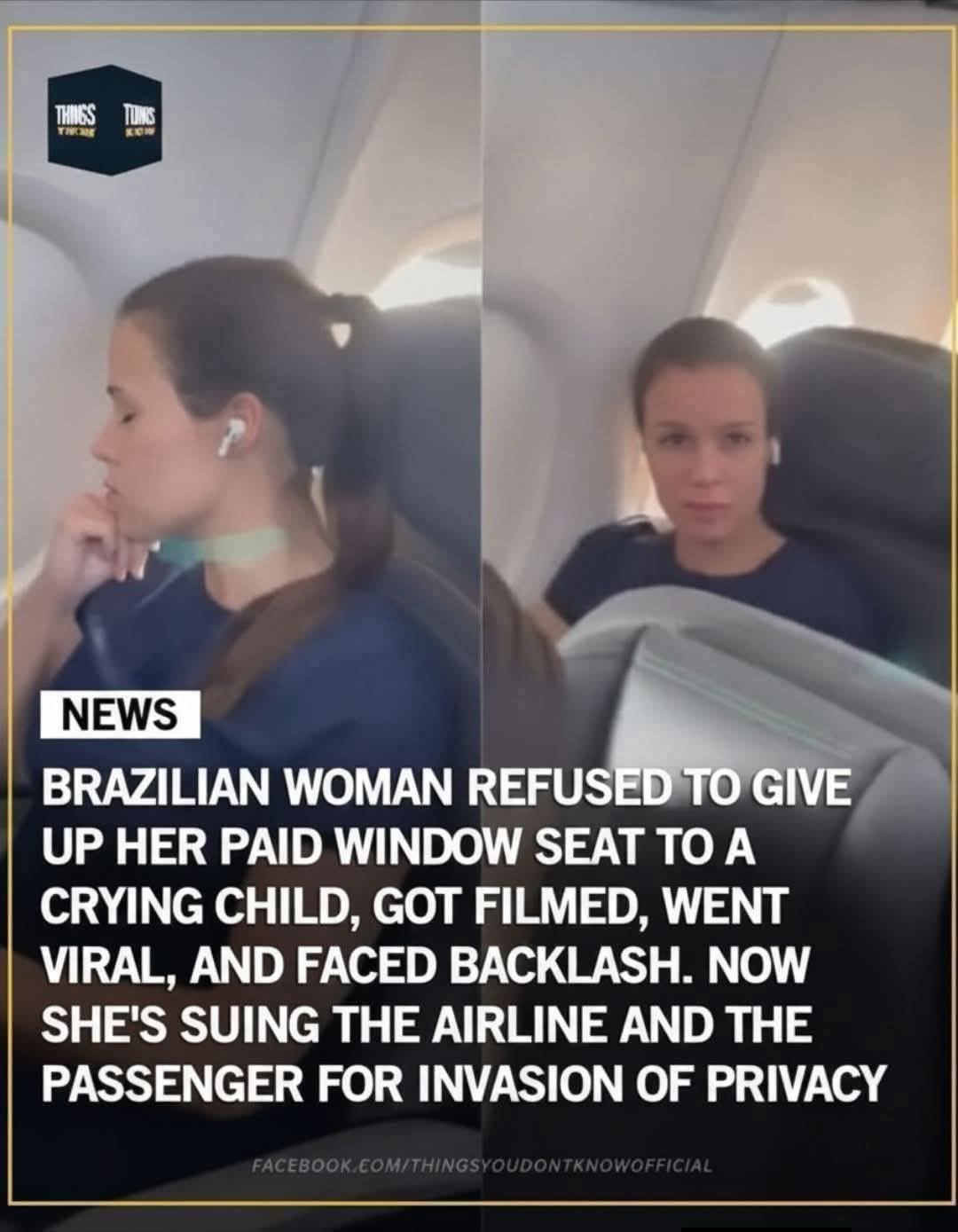
The viral airplane incident highlights a growing social dilemma: kindness is increasingly being treated as an obligation rather than a choice. While empathy toward children and parents is important, society is drifting toward the idea that disruptive behavior must be accommodated by everyone else — and that expectation is flawed.
A paid seat is not a shared social resource; it is a personal agreement between a passenger and the airline. Choosing not to give it up does not automatically make someone selfish. What’s more concerning is how quickly public opinion punished the woman while excusing the situation that created the conflict in the first place. Children naturally cry and struggle, but allowing disruptive behavior to dictate other people’s comfort teaches the wrong lesson — both to kids and to adults.
Healthy societies set boundaries. Teaching children that the world will always rearrange itself around their emotions does not build resilience or respect for others’ space. Parents deserve understanding, but responsibility for managing a child’s behavior ultimately belongs to the parent, not strangers pressured by social expectations or viral outrage.
The real issue isn’t a window seat — it’s the normalization of entitlement and the internet’s habit of enforcing morality through public shaming. Civility works best when kindness is voluntary, boundaries are respected, and children learn early that consideration goes both ways.
